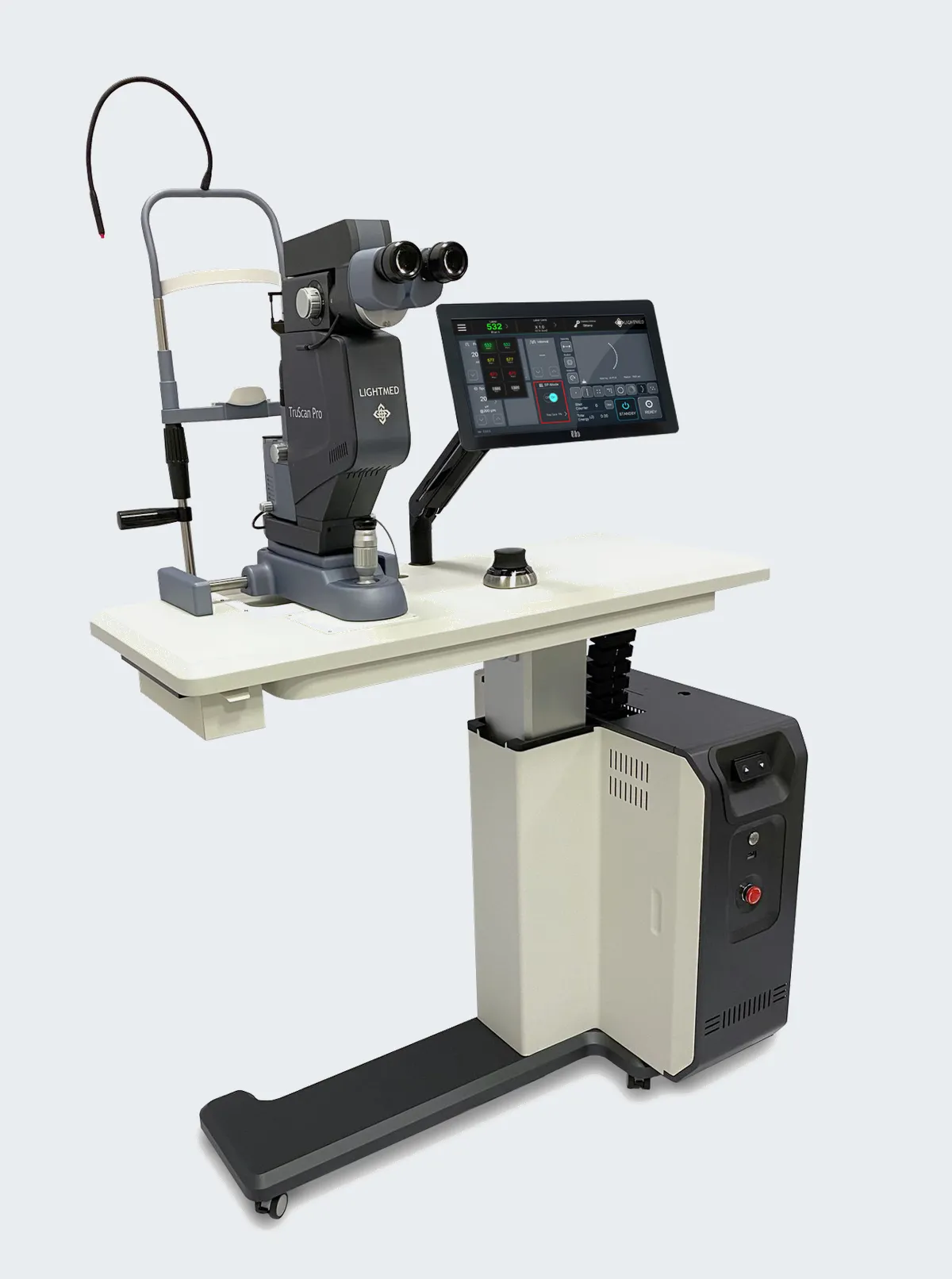
SLT vs YAG vs photocoagulation: matching the laser to the condition
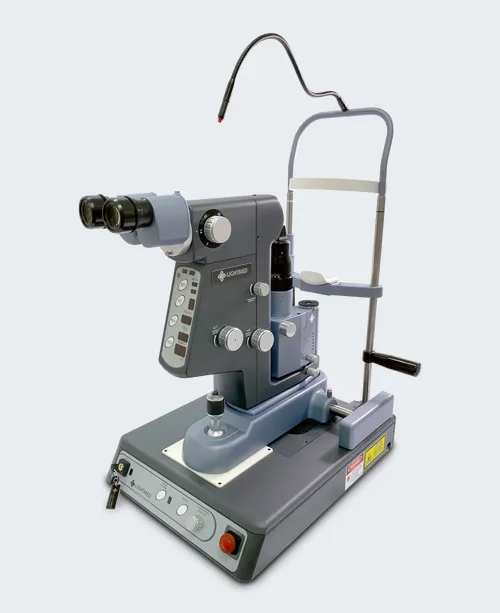
SLT, YAG, and photocoagulation are often grouped together as lasers, but they do very different work. Choosing well starts with understanding what each one is actually for.
SLT for glaucoma
Selective laser trabeculoplasty offers a gentle, repeatable option for lowering intraocular pressure in open-angle glaucoma. It targets pigmented trabecular meshwork cells while sparing surrounding tissue, which is why it can be repeated as part of long-term management.
For many clinics it is a practical first-line tool, sitting alongside or ahead of medication in the treatment pathway.
Match the laser to the condition first, and the buying decision tends to follow.
YAG photodisruption for the anterior segment
Nd:YAG lasers clear posterior capsule opacification after cataract surgery and perform peripheral iridotomy for angle-closure. The same platform also treats vitreous floaters through vitreolysis.
It is a procedure most clinics run every week, so reliability and consistent pulse energy matter more than headline features.
Photocoagulation across green, yellow and infrared
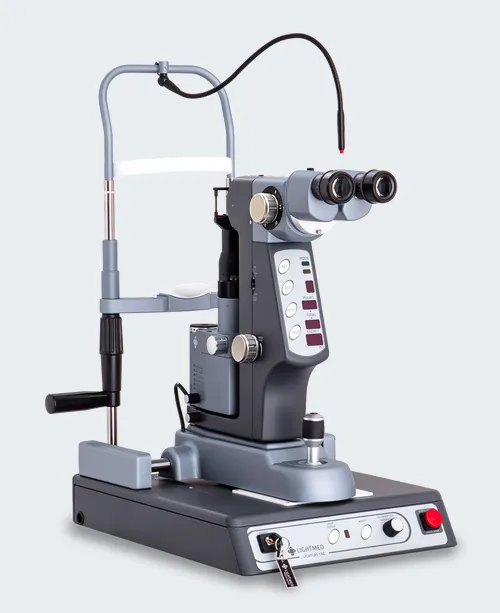
Retinal photocoagulation uses controlled thermal effect to treat conditions from diabetic retinopathy to retinal tears. The wavelength you choose changes what you can treat and how safely.
Green is the versatile workhorse, well absorbed by hemoglobin and melanin. Infrared penetrates deeper for choroidal and transscleral work. Yellow sits in between, with characteristics that make it especially useful near the macula.
Why 577nm yellow leads near the macula
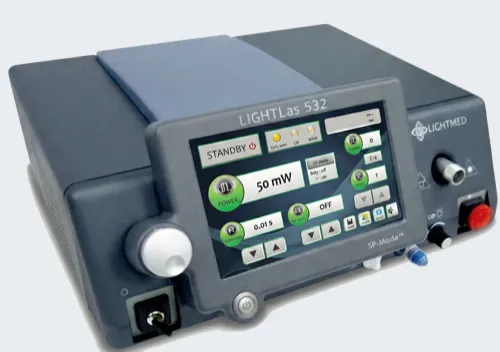
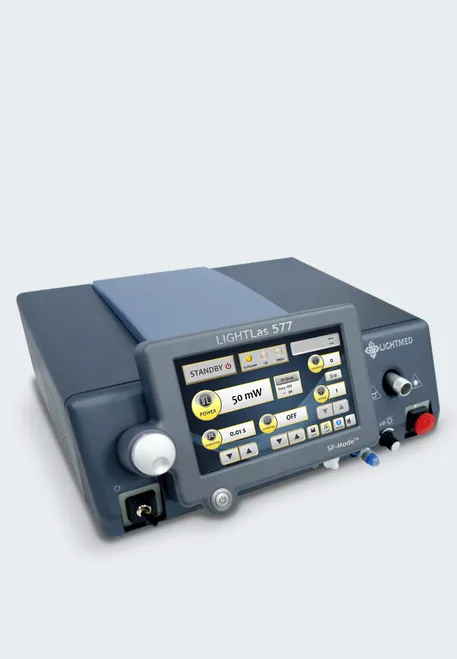
The 577nm yellow wavelength is strongly absorbed by hemoglobin and barely absorbed by xanthophyll. That means you can treat closer to the fovea with greater safety, which is why 577nm has become the gold standard for macular work.
For practices with a heavy macular caseload, a true yellow laser is often the single most valuable wavelength to have.
Where combination platforms earn their place
Many clinics need more than one family of laser. Combination and multi-wavelength platforms put SLT, YAG, and photocoagulation, or several wavelengths, into a single console, saving room space and capital.
Mapping your procedures to the right platform avoids both gaps and overlap. Start with what you treat most, and choose a system that can expand into the rest.